
AUSTRALIA
ustralia is, by almost any measure, an unreasonable country. It is simultaneously a continent, a nation, a wilderness, and one of the most urbanised societies on earth. It contains the world’s oldest living culture — the Aboriginal and Torres Strait Islander peoples, whose civilisation stretches back more than 65,000 years — and one of its youngest, most dynamic cities in Melbourne. It holds the world’s largest coral reef system, its most extensive red desert, and some of its most liveable coastal cities, all within the borders of a single country roughly the size of the contiguous United States.
For the international visitor, Australia presents a particular kind of challenge: it is so large, so varied, and so genuinely remarkable in so many different directions that the temptation is to try to do all of it in two weeks. This guide will gently dissuade you from that approach — and help you instead build a trip that goes deep rather than simply far.
🌏Size 7.7 million km²
🌡️Best season Apr–Jun · Sep–Nov
💱Currency AUD (A$)
✈️Main hubs Sydney · Melbourne · Brisbane
🗣️Language English
🔌Power plug Type I · 230V
Why Australia Belongs on Your List
No other destination on earth offers the same combination of extremes. You can swim on a tropical reef at dawn, fly three hours, and be in a world-class restaurant by evening. You can walk through a rainforest that existed before the dinosaurs in Far North Queensland and be back in a modern city by nightfall. The landscapes are staggering — the terracotta monolith of Uluru rising from a flat red plain, the improbable blue of the Whitsunday beaches, the eucalyptus-grey quietness of the Blue Mountains — and they are entirely unlike anything else on earth.
Then there is the culture. Australia’s cities consistently rank among the world’s most liveable, and that liveability is viscerally felt as a visitor: the coffee is extraordinary, the food scene is genuinely world-class (shaped by waves of immigration from Southeast Asia, the Mediterranean, and the Middle East), and the general atmosphere of outdoor, active, unpretentious social life is deeply appealing. This is a country that has worked out how to be comfortable in its own skin — and that comfort is contagious.
Australia’s size is its greatest challenge and its greatest gift. To truly understand it, you must choose a piece of it — and go deep.
Australia’s Regions: Where to Go
New South WalesUrban · Coastal · Blue Mountains
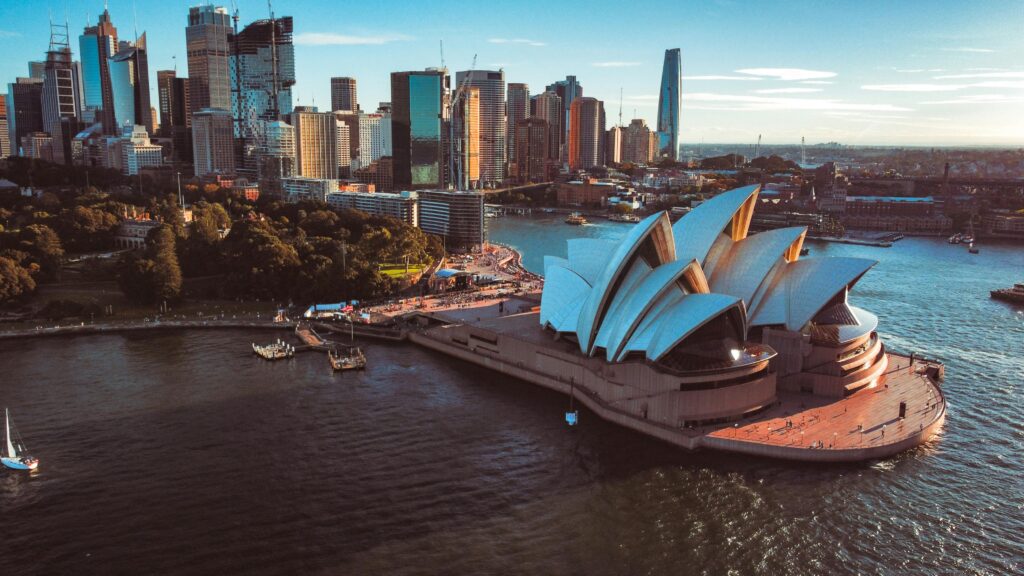
Home to Sydney — the Harbour, the Opera House, Bondi Beach — and the spectacular Blue Mountains one hour inland. Australia’s most visited state.
VictoriaCulture · Food · Great Ocean Road
Melbourne is Australia’s cultural capital — galleries, laneways, coffee, sport. The Great Ocean Road along the southern coast is one of the world’s great scenic drives.
QueenslandReef · Rainforest · Tropical
The Great Barrier Reef, the Daintree Rainforest, the Whitsunday Islands, and the Gold Coast. Australia’s most spectacular natural attractions are concentrated here.
Northern TerritoryOutback · Indigenous · Uluru
The red heart of Australia. Uluru, Kakadu National Park, and the deepest engagement with Aboriginal culture and landscapes. Transformative but remote.
Western AustraliaRemote · Wild · Ningaloo
Perth, the Ningaloo Reef (often better than the Great Barrier Reef for accessibility), the Kimberley, and a sense of space that makes even other Australian states feel crowded.
South AustraliaWine · Food · Barossa
The Barossa and Clare Valleys produce some of the world’s finest Shiraz. Adelaide is regularly cited as Australia’s best food city. The Flinders Ranges are haunting and beautiful.
Top Things to Do in Australia
- 01Dive or snorkel the Great Barrier Reef. The world’s largest coral reef system — 2,300 kilometres of living structure visible from space — is best experienced from Cairns or Port Douglas. Book a full-day liveaboard dive trip for the most immersive experience. The outer reef is significantly richer than the inner reef accessible on day trips.
- 02Watch the sun rise over Uluru. Climbing the monolith is now permanently closed, out of respect for Anangu traditional owners. But the sunrise and sunset viewing areas — where the rock shifts through amber, crimson, and violet — are among the most moving natural spectacles in the world. Stay at least two nights at Uluru-Kata Tjuta National Park.
- 03Drive the Great Ocean Road. The 243-kilometre coastal route west of Melbourne passes sea stacks, rainforest gullies, surf towns, and the Twelve Apostles — limestone pillars rising from the Southern Ocean. Allow at least two days; three is better.
- 04Explore Sydney Harbour on foot. The Bondi to Coogee coastal walk (six kilometres, two hours) and the Manly to Spit Bridge walk are two of the best urban hikes in the world. The Harbour Bridge climb offers an unmatched perspective on the city — book well in advance.
- 05Spend a week in Melbourne’s laneways. Hosier Lane, Degraves Street, Hardware Lane — Melbourne’s urban culture is built in its alleyways: independent coffee shops, street art, tiny bars, vinyl record stores, and restaurants from every corner of the world. Allow more time here than you think you need.
- 06Swim with whale sharks at Ningaloo. Ningaloo Reef in Western Australia is one of the few places on earth where you can reliably swim with whale sharks (March to July). The reef itself rivals — and in places surpasses — the Great Barrier Reef for clarity and accessibility.
- 07Take the Ghan train from Adelaide to Darwin. A 54-hour, 2,979-kilometre rail journey through the red heart of the continent — through the Flinders Ranges, the Simpson Desert, and the Top End. One of the great train journeys of the world and a genuinely transformative way to understand Australia’s scale.
- 08Walk in the Daintree Rainforest. The oldest tropical rainforest on earth — older than the Amazon — survives in Far North Queensland. Guided night walks reveal the extraordinary density of wildlife. Cape Tribulation, where the rainforest meets the reef, is one of Australia’s most extraordinary landscapes.
— ◆ —
Australia’s Wildlife: What You’ll Encounter
No country on earth has wildlife quite like Australia’s. Isolated from other landmasses for 85 million years, the continent evolved an almost entirely unique fauna — marsupials, monotremes, and an avian diversity that still astonishes ornithologists. For most international visitors, wildlife encounters are among the most memorable experiences of the trip.
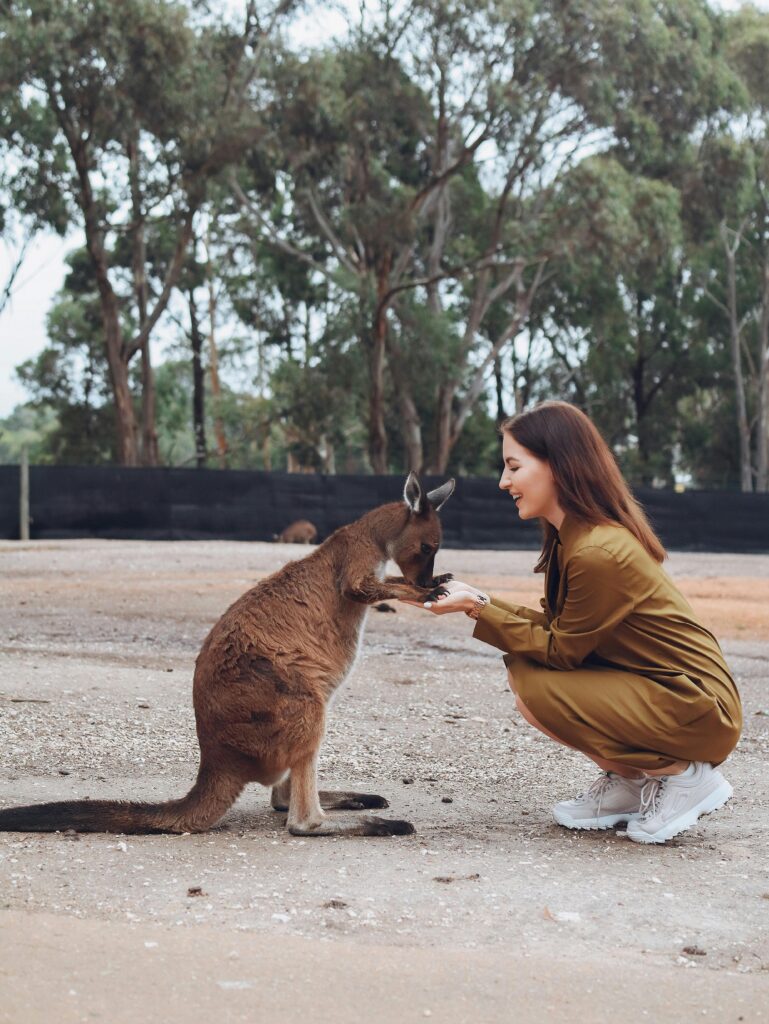
Kangaroos & WallabiesUbiquitous at dawn and dusk near any national park. Do not feed them.
KoalasWild koalas in Magnetic Island (QLD) and Cape Otway (VIC). Sleep 20 hours daily — look up in eucalyptus forks.
Saltwater CrocodilesPresent in all northern waterways. Observe all warning signs without exception. Fatal attacks occur annually.
Whale SharksNingaloo Reef, March–July. The world’s largest fish, entirely harmless to swimmers.
PlatypusElusive; best spotted at dawn in Eungella National Park (QLD) and parts of Tasmania.
Humpback WhalesMigrating north June–October along the east coast; south November–March. Whale watching from Sydney, Hervey Bay, and Albany (WA).
Important safety noteAustralia has six of the world’s ten most venomous snakes, and several species of potentially dangerous spider. In practice, bites are extremely rare — snakes avoid humans and spiders are shy. Common sense applies: don’t reach into crevices or under logs, wear closed shoes in bushland, and always seek medical attention if bitten. The risk is real but should not deter travel.
When to Visit Australia
Australia’s sheer size means that “best time to visit” is a meaningless question without specifying where. The country straddles tropical and temperate climate zones, and its seasons are the reverse of the Northern Hemisphere.
Dec – Feb25–35°CSouthern summer: beaches, school holidays, peak prices. Avoid Queensland’s tropical north (cyclone season).
Best — southMar – May18–28°CAutumn: ideal for Sydney, Melbourne, the Great Ocean Road. Crowds thin, prices ease.
Best — northJun – Aug20–30°CDry season in Queensland and NT: perfect for reef, Kakadu, and Uluru. Southern winter — cool but manageable.
Sep – Nov18–30°CSpring: wildflowers in WA, whale watching on the east coast, reef season begins. Excellent across most of the country.
Australian Food & Coffee Culture
The Australian food scene is one of the great underrated culinary stories of the world. Shaped by its geography — access to extraordinary seafood, subtropical produce, and pastoral beef and lamb — and by successive waves of immigration (Italian and Greek in the postwar decades, then Vietnamese, Chinese, Lebanese, and Indian communities from the 1970s onward), Australian cuisine has developed an identity that is confident, multicultural, and ingredient-obsessed.
Flat WhiteCoffee. Australia — specifically Melbourne — invented the flat white, and its coffee culture is the finest in the English-speaking world. The third-wave specialty scene is extraordinary in Sydney, Melbourne, and Brisbane. Never order a “regular coffee” — you will receive blank stares. Order a flat white, a long black, or a piccolo.
SeafoodMoreton Bay bugs, Balmain bugs & barramundi. Australian seafood is exceptional. Mud crabs in Darwin, Moreton Bay bugs in Brisbane, Sydney rock oysters on the NSW coast, and barramundi — the continent’s signature fish — across the north. Fish and chip shops near any beach are a rite of passage.
BrunchBrunch culture. Australia arguably invented the modern café brunch. Avocado toast, smashed avo, corn fritters with poached eggs — these are not trends here, they are institutions. Weekend brunch queues at top Melbourne and Sydney cafés can exceed an hour. Worth it.
BBQThe backyard barbecue. The Australian backyard barbie — lamb chops, snags (sausages), and seafood over fire — is a genuine cultural institution. If you are lucky enough to be invited to one, accept without hesitation.
VegemiteVegemite & Tim Tams. The two totemic Australian foods. Vegemite (a yeast extract spread, intensely salty) must be applied in the thinnest possible scraping on heavily buttered toast. Tim Tams (chocolate biscuits designed for dunking in hot drinks) require no instruction.
WineAustralia produces world-class wine across South Australia (Barossa Shiraz, Clare Valley Riesling), Western Australia (Margaret River Cabernet and Chardonnay), and the Yarra Valley and Mornington Peninsula in Victoria. Ordering Australian wine in Australia is almost always the best choice on the list.
Getting Around Australia
Australia’s distances are its defining logistical challenge. Sydney to Perth is 4,000 kilometres by road — farther than London to Tehran. Flying is the only practical way to move between states on a time-limited trip. The domestic airline network is extensive, and fares are reasonable if booked in advance. Qantas, Virgin Australia, and Jetstar operate frequent services between all major cities.
Within cities, public transport varies enormously. Sydney and Melbourne have excellent metro and tram networks respectively. Brisbane, Perth, and Adelaide have functional but less comprehensive systems. Outside cities, a hire car is essentially mandatory — distances between attractions make public transport impractical for most itineraries. The roads are excellent, the driving is on the left, and the signposting is generally clear, but distances are consistently larger than they appear on maps.
Driving tipOn outback roads and regional highways, watch for kangaroos at dawn and dusk — they are a genuine road hazard and a leading cause of serious accidents. Never drive between dusk and dawn on unfamiliar rural roads. Fuel up at every opportunity outside cities: distances between petrol stations in the outback can exceed 200 kilometres.
Practical Tips for Visiting Australia
Visas: Most visitors require an Electronic Travel Authority (ETA) or a standard tourist visa, applied for online before departure. Citizens of the UK, USA, Canada, and most EU countries can apply for an ETA electronically. Apply at least two weeks before travel.
Sun protection: Australia’s UV index is among the highest in the world — the ozone layer is thinnest over the Southern Hemisphere. SPF 50+ sunscreen, a wide-brimmed hat, and UV-protective clothing are not optional; they are genuine health necessities. “Slip, slop, slap” (slip on a shirt, slop on sunscreen, slap on a hat) is a public health campaign that Australians learn in childhood.
Tipping: Not customary or expected in Australia. Restaurant service charges are already included in the price. Tipping for exceptional service is welcome but never obligatory — unlike in the United States, its absence is not considered rude.
Costs: Australia is an expensive country by global standards. Budget a minimum of A$150–200 per person per day for mid-range accommodation, meals, and activities, exclusive of flights and car hire. Eating Vietnamese, Thai, or Chinese food in any major city is both cheaper and often better than eating at traditional Australian restaurants.
Australia survival cheat sheet
VisaApply for your ETA or tourist visa online before departure. Most nationalities are eligible — allow two weeks minimum.
SunSPF 50+ every day, including overcast days. The UV index is dangerously high year-round. Hats are not a fashion choice — they are armour.
WildlifeDon’t touch, feed, or approach wild animals. Observe crocodile warning signs without exception. Be snake-aware in bushland.
DistancesFly between states. Hire a car within regions. Never underestimate how long road journeys take in the outback.
CoffeeOrder a flat white, long black, or piccolo. “Coffee with milk” will produce something wonderful if you trust the barista.
CultureAustralians value directness, humour, and unpretentiousness. Excessive formality is often read as condescension. Relax — they will too.
IndigenousEngage respectfully with Indigenous culture. Do not photograph sacred sites without permission. Acknowledge Country when invited to do so.